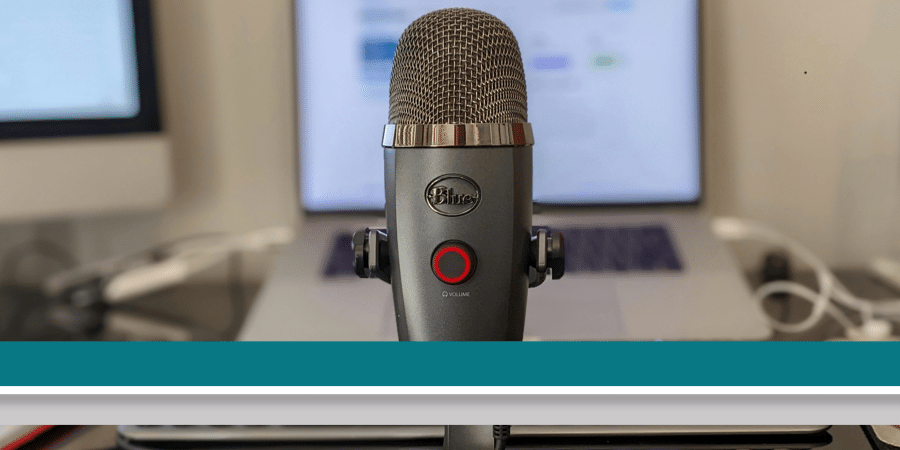
It seems like everyone is starting a podcast today, or is thinking about launching one.
However, most financial services firms don’t use podcasting as part of their content marketing strategy. Today, with approximately 2,400 broker/dealers and 33,000 Registered Investment Advisors, fewer than 200 advisors host a branded podcast. Similarly, few large and boutique asset management firms do podcasts.
This gap raises a strategic question: Does this financial services podcast paucity reflect a true niche market, or is it a marketing opportunity for firms struggling with the pain of too few qualified leads?
This article helps asset management firms determine if launching and maintaining a podcast program is right for them.
A Short History of Podcasting
Podcasting is just over 20 years old. The early shows were audio-only and available just on an Apple iPod. In 2004 Guardian journalist Ben Hammersley popularized the term “podcast,” and in 2005 Apple added podcast support to iTunes, which gave podcasts a mainstream platform.
A few financial services professionals, while not exactly early adopters, started podcasting around 2010. Today, listeners can choose from more than one million podcasts globally. Podcast listeners are projected to exceed 651million worldwide by 2027.
Despite this popularity, podcasts in financial services are way behind. Only an estimated 2–5% of wealth managers (financial advisors, RIAs, and broker‑dealers) host podcasts. Few large and boutique asset managers—perhaps no more than 100—run podcasts.
More asset managers are guests on other people’s podcasts rather than hosting their own.
Today, the five most popular podcast categories are comedy, news, culture, true crime, and sports. Together, they account for more than half of total podcast listening time.
The Case FOR Asset Manager Podcasts
Podcasts have become a business development tool that establishes credibility and connections in ways traditional marketing can’t.
Builds personal relationships
Personal connections matter. With podcasts, people can see and hear you in ways articles or websites can’t. Regular listeners learn your humor and thought process.
Creates trust
Podcast ads are often perceived as more trustworthy than ads on TV, radio, or social platforms. A recent Harris Poll reports that 35% of consumers consider podcast ads more trustworthy than advertising on other media channels. Listeners have also reported high trust in podcast hosts and their recommendations,
Expands reach to new audiences
While podcasts didn’t exist 20 years ago, nearly half of Americans now listen to them each month. Many people love the ability to listen and learn whenever they want. For asset managers, podcasts offer a great way to reach people who don’t like to read or tune in on someone else’s schedule. What more, podcasts offer an additional way to reach Millennials and Gen Z, who comprise more than six in ten podcast listeners in the U.S.
Makes you a thought leader
Who are the high-value prospects and clients you want to serve? What key problems or issues will your podcast help them solve? A thoughtful podcast series can help make you a thought leader.
Elements for Successful Podcasts
Podcasting can become a great asset for the right financial firm. So launch and maintain a podcast program if you have:
Clear business goals
What do you want to achieve? You should define what you hope to get out of your podcasts before you record a single episode. Goals can include lead generation, brand authority, client education, or relationships with centers of influence. A good goal is not just to say you have a podcast.
Defined audience niche
Can you define who you want to reach and why they would spend 30 minutes with you? Is your audience pre‑retirees, retirees, women, business‑owners, entrepreneurs, retail or institutional investors, or a mix of the above? When you know your audience’s questions and pain points, you can tailor your show’s topics, tone, and guests.
Capacity to produce consistently
Can you commit the time and money to produce and post at least one podcast per month, if not two? Managers that maintain a consistent posting schedule can build loyalty over time. Firms that post sporadically can discourage people from looking for you.
Ability to leverage content
Each episode should be repurposed into multiple content assets, such as blog posts, LinkedIn posts, emails, newsletters, infographics, quizzes, and more. Can your firm do this? If yes, you can leverage one timely episode into months of content. Evergreen content on timeless topics can help you get found through SEO for a year or more.
Great interviewing skills
Is your team willing to learn basic podcast hosting skills, ask good questions, and tell simple stories? Some leaders are naturals or have on-air experience. A bad interviewer reflects badly on you.
Compliance readiness
Yes, you need to know what you can and cannot say, but can you also properly archive podcast episodes as required by the SEC? The SEC Marketing Rule 204-2 requires investment advisers to retain all written and other communications related to recommendations and advice, distributed to 10 or more people, for at least five years, and in an easily accessible format. This means podcasts, too, plus show notes and transcripts.
Distribution plan
How do you get people to notice you after you’ve produced your podcasts? Effective podcasters use email, social posts, short video clips, website placement, and paid promotion to grow their listenership.
The Case AGAINST Asset Manager Podcasts
Podcasts don’t run on their own. You need a long pipeline of guests people want to tune into, technical production support, and a promotion and distribution plan. Many podcasters take a trip on the Oblivion Express after fewer than ten episodes or within the first year.
You can’t find the budget
How much money does it take to produce a noteworthy podcast series? While some firms can do much with internal resources, for many managers, a podcast requires a sizeable investment in production, promotion, and distribution.
Professional podcast production can cost between $500 and $5,000 to launch. Individual episodes may cost $500-$2,500 for post-production, which may include editing, sound mixing, video production, creating a promotional trailer, written episode description, and social media soundbites. Many boutique firms choose to outsource these functions to specialists.
You don’t know how to get found
It’s easy to be invisible, hard to be found. How do you get your podcast in front of the right listeners? Most financial professionals don’t actively search for new podcasts. YouTube, Spotify, Apple, and other streaming platforms promote popular shows over new ones. Firms must invest in great content, SEO, and digital marketing to be discovered.
You can’t commit the time
Launching an asset management podcast can be a serious time commitment. So, how much time do you need? Success may take six months to two years and approximately 100 episodes. Success typically means an audience ranking in the top 20–50% of podcasts, with roughly 100–1,000 downloads per episode, and measurable new leads, conversations, and new clients.
You can’t produce a technically polished show
Production quality needs to be high. Poor audio or video will lose listeners. Many won’t recognize quality issues, but your audience will notice background noise, uneven volume, or grainy visuals.
You can’t measure success
It may be tough to quantify your return on investment (ROI). Many marketing teams struggle to connect podcast metrics to ROI. For some firms, producing webinars, videos, written thought leadership content, and social media might create more immediate results.
Let’s Put on a Podcast!
Ok, let’s say you’ve decided to be a podcaster, or are still thinking about it. Who is your key audience, how do you talk to people, and what are potential themes for your podcast?
Target audience
Who is your audience? The target market for wealth managers is typically affluent individuals and families, and institutional investors, while asset managers may work with financial advisors, allocators, analysts, and broker-dealer gatekeepers.
Tone
How do you want your podcast to look, sound, and feel? The tone is the overall personality and emotional impact of your podcast. You can be formal or conversational, technical or plain‑spoken, fast-paced or deliberate, and serious or optimistic. Music can impact your tone by setting emotional expectations. Your visual style, from logo design to color palette, should support your brand identity, too.
Topics
Looking for themes to get started on a potential podcast program? Consider these:
Wealth management podcast ideas
The Confident Retirement – Investor education on retirement planning, tax strategies, and market fundamentals that ease investor anxiety and build long-term confidence.
Your Financial Future – Practical guidance on taxes, investment basics, and life transitions that impact your money.
Estates and Legacies – Financial planning conversations covering estate and legacy issues, charitable giving, and multigenerational wealth transfer.
The Wealth Roundtable – Interviews with portfolio managers, financial planners, and outside experts on timely client concerns.
Asset management podcast ideas
Institutional Insights – Market commentary on investment strategy, and economic analysis for institutional investors and advisors.
The Disciplined Investor – Discussions on investment philosophy, process discipline, and risk management.
CIO Perspectives – Direct commentary from your senior investment management team on timely market issues.
Strategic Allocation – Analysis of asset allocation, market opportunities, and institutional portfolio construction.
FAQs on Asset Manager Podcasts
How much money can firms make on a podcast?
You can make anything from nothing to a substantial income from a podcast program. However, most shows earn little or break even at best. Revenue typically comes from sponsorships, advertisements, merchandise, live events, and book sales. Many creators treat a podcast as a loss leader to drive leads. With millions of shows and nearly half quitting before episode three, success usually takes one to two years of consistent publishing.
Why do most financial podcasts fail?
Most podcasts fail because leadership focuses only on what interests them, rather than solving listeners’ problems. Podcasts also fail because the content is so boring that no one cares and won’t share them. Audio-only podcasts fail because people demand and expect video. Another path to failure is when podcasters try to build their audience alone instead of appearing as a guest on other podcasts.
What metrics should I use to measure success?
You can measure podcast success through both quantitative and qualitative metrics. On the quantitative side, track downloads per episode—50-100 qualified downloads within the first seven days is a good starting benchmark—along with total listener counts and average amount of time. Monitor increases in website and social media traffic, then connect them to business outcomes like new client conversations, assets under management, and revenue growth.
Qualitatively, look for validation such as invitations to guest on other podcasts, speak at industry events, or participate in media interviews. Together, these metrics can show whether your podcast is building awareness and credibility.
How should I pick podcast guests?
You’re treading water without the right guest list. A great guest either interests your audience or has a large audience of their own. You want storytellers and people with a unique point and relevant expertise. Consider evaluating potential guests by creating a scorecard of ideal characteristics, such as expertise, assets managed, storytelling ability, Instagram followers, and promotional potential—then rank candidates numerically on each criterion.
What is a podcast platform, and why do podcasters need them?
Podcast platforms store your audio files, generate your show’s RSS feed, and distribute episodes. They also manage uploads, distribution, and audience analytics. YouTube is the most popular platform, with one in three listeners in the United States using it for podcasts. Spotify is number two at 26 percent and Apple Podcasts are third at 14 percent. Other widely used platforms are Podbean and CoHost.
How long should episodes be?
While you don’t have to follow the crowd, most podcasts are about 30 minutes long, which represents 30 percent of all podcasts in the US. The shortest episodes are typically 20 minutes, the longest are 40 minutes. However, length matters less than engagement. More than one in five listeners drop off within the first five minutes. You gotta start strong!
The Final Word: Should Asset Managers Be Podcasters?
Asset managers should treat podcasting as a strategic asset. A podcast strategy can help build your visibility, reach, and trust. But only launch a podcast if you can commit to producing 100+ episodes over one to two years or more, have a specific target audience, enjoy the format, and can articulate what makes your perspective unique.
Otherwise, focus on becoming a sought‑after guest on other firms’ podcasts and create marketing content your prospects and clients will find useful.
To podcast or not to podcast? That is the question—and unlike Hamlet, your decision should be driven by your business goals, resources, and plan to convert listeners into leads.
Schedule a complimentary strategy session with Dan Sondhelm, CEO of Sondhelm Partners, to learn if and how a content marketing strategy that includes podcasting can enrich your marketing efforts.
Frank Serebrin is the Content Marketing Director for Sondhelm Partners. He leads strategic and creative content and marketing services for our asset management and wealth management clients.
Connect

